
Why We Build with ICF
When we present a proposal for a new custom home, we don’t ask clients whether they want insulated concrete forms (ICF). We explain that this is how we build.
At Handley Construction, ICF isn’t an upgrade or an optional system — it’s the foundation of our design-build process. We believe the structure of a home should be engineered for long-term performance, durability, and comfort, not simply built to meet minimum code requirements.
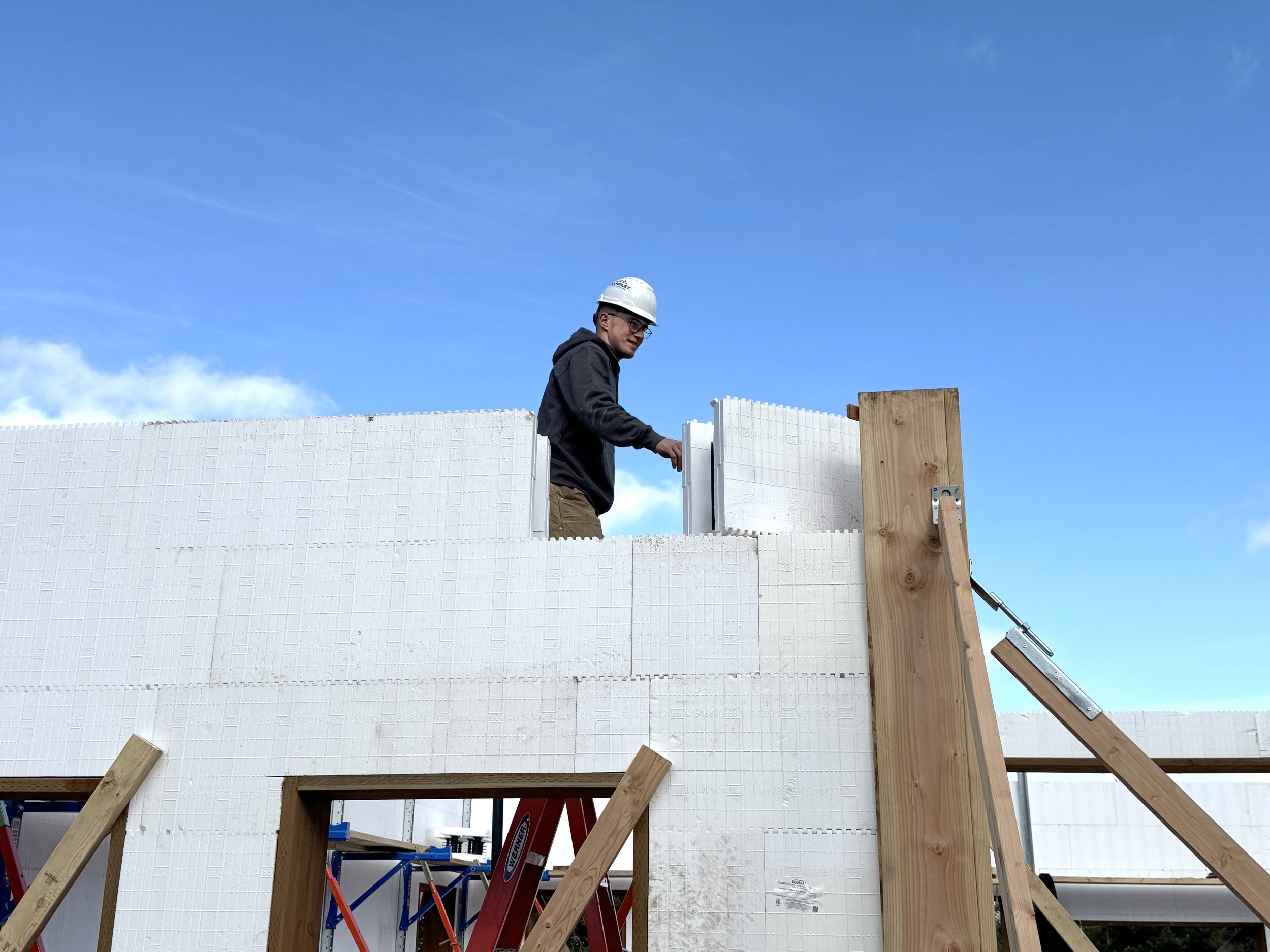
ICF Is a Building System, Not a Feature
ICF construction is more than thicker walls or higher insulation values. It is a fully integrated structural system that combines:
Reinforced concrete
Continuous insulation
Superior air sealing
Long-term durability
Because the structure, insulation, and air barrier are unified into a single assembly, many of the weaknesses common in traditional construction are eliminated before the house is ever framed.
This is why we design our homes around ICF from the very beginning — not as a late-stage substitution or a line-item upgrade.
The Hidden Costs of Traditional Construction
Traditional wood-framed construction is familiar and widely accepted, but familiarity often masks long-term tradeoffs that don’t show up on day one.
Energy Loss Through the Structure
Wood framing creates thermal bridges at studs, plates, headers, and rim boards. Even with good insulation, these areas allow heat to pass through the structure, reducing overall efficiency.
ICF walls provide continuous insulation and thermal mass, helping maintain consistent interior temperatures and reducing long-term energy demand.
Air Leakage and Comfort Issues
Many homes technically meet energy code while still allowing uncontrolled air movement through the building envelope. The result is often:
Drafts and cold spots
Uneven room temperatures
Increased HVAC run times
ICF construction naturally creates a tighter envelope, improving comfort without relying on layers of tapes, sealants, and aftermarket fixes.
Moisture Risk and Durability
Moisture intrusion is one of the primary causes of long-term structural issues in residential construction. Traditional assemblies depend heavily on perfect installation of membranes and flashing to manage water.
ICF walls are inherently resistant to moisture and rot, reducing the risk of mold, degradation, and costly repairs years down the road.
Maintenance and Lifecycle Costs
Homes built strictly to code minimums are often optimized for initial cost rather than long-term performance. Over time, this can lead to higher operating costs, more frequent maintenance, and reduced durability.
We approach construction differently designing homes as long-term assets built to perform for decades.
ICF Isn’t for Every Builder
Building with ICF requires a different mindset than conventional framing. It demands:
Early engineering coordination
Precise planning of openings and loads
Integration of structure, mechanical systems, and finishes
Experience executing concrete-based construction at a high level
Because of this, many builders avoid ICF or offer it only as a specialty option. For us, it is the backbone of how we design and build.
Building with Intentionality
Our goal is not simply to build houses, it is to build high-performance homes that prioritize durability, comfort, and long-term value. By committing to ICF as our standard construction method, we can engineer, design, and build each home as a complete system rather than a collection of parts.
That intentionality shows up in the finished product not just on move-in day, but for decades to come.