
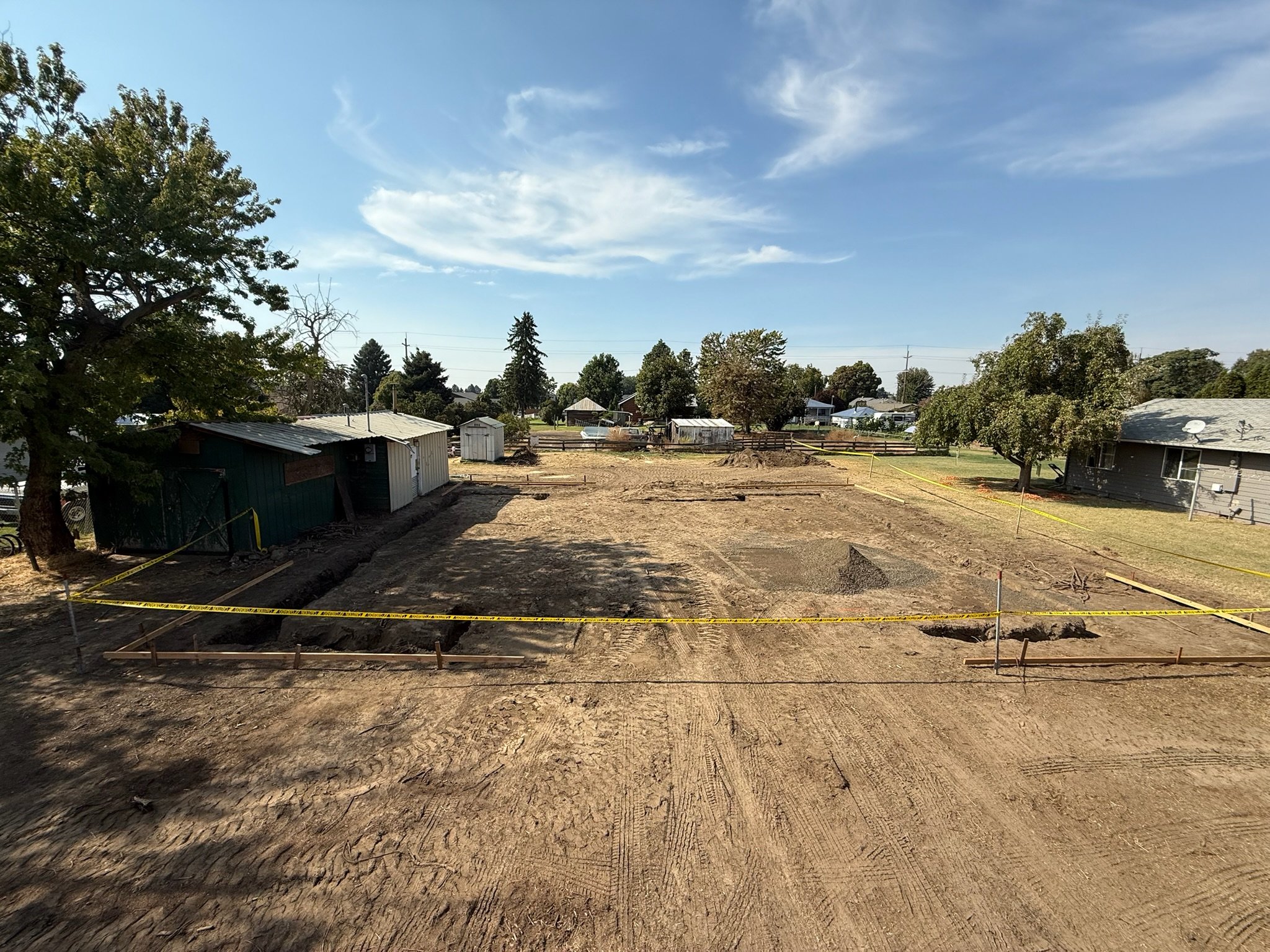
Building a custom home on acreage gives you opportunities that a typical residential lot doesn't. You have more freedom in where the home sits, how it relates to the landscape, and what you can create around it.
But more land also means more decisions.
Before designing the house, it is worth understanding the property itself. Where you place the home can affect everything from the view out the windows to the amount of excavation, driveway, utilities, and sitework required to build it.
1. Start With Where the Home Should Sit
It's tempting to find the best view on the property and immediately decide that's where the house belongs.
The view matters, but it is only one part of choosing a building location.
We also look at:
Topography and the amount of excavation required
Access from the road to the building site
Drainage and how water moves across the property
Orientation, sunlight, privacy, and views
Sometimes moving a home a relatively short distance can significantly change the amount of sitework required. The goal is to find the location that makes sense both for the home and for the property around it.
Think About Access Early
On acreage, the driveway can become a significant part of the project.
A long driveway isn't simply gravel between the road and the house. Grade, drainage, culverts, turning areas, construction access, and the ability for larger vehicles to reach the site all need to be considered.
The driveway also becomes part of the experience of the property. Its location affects how you approach the home, what you see when you arrive, and how much of the property is disturbed during construction.
Planning access before the house is finalized allows the two to work together rather than treating the driveway as an afterthought.
Understand Where Your Utilities Are Coming From
Utilities that are simple on an in-town lot can become much more involved on acreage.
Before getting too far into design, we want to understand how the property will be served. Depending on the site, that can include:
Electrical service and the distance to available power
Water service or a private well
Public sewer or a septic system
Propane, natural gas, internet, and other services
Distance matters. A house located farther into a property may provide better privacy or views, but it can also mean longer utility runs, additional trenching, and more infrastructure.
Let the Property Influence the Design
One of the advantages of starting with a custom design is that the house doesn't need to be forced onto the property.
A sloped property may create an opportunity for a daylight basement. A particular orientation may improve natural light. Views may influence the location of living spaces and windows. Existing terrain can influence patios, retaining walls, garages, and outdoor areas.
We believe the site and the house should be designed together.
Planning a Custom Home in the Walla Walla Valley?
If you own property in the Walla Walla Valley and are considering building, involving the design and construction team early can help you understand the opportunities and challenges of the site before major design decisions are made.
At Handley Construction & Development, we bring design, site development, and construction together to plan the home and property as one project.
