
The backsplash may cover a relatively small portion of a kitchen, but it has a noticeable effect on the finished room. It connects the countertops to the cabinetry, protects the wall in everyday work areas, and can either introduce another design element or continue the material already used on the counters.
Two common choices are a backsplash made from countertop material and a separate tile backsplash. Both can work well, but they offer different possibilities for appearance, maintenance, installation, and cost. At Handley, we consider that choice alongside the rest of the kitchen, so the finished space feels intentional.
1. What Is a Countertop Backsplash?
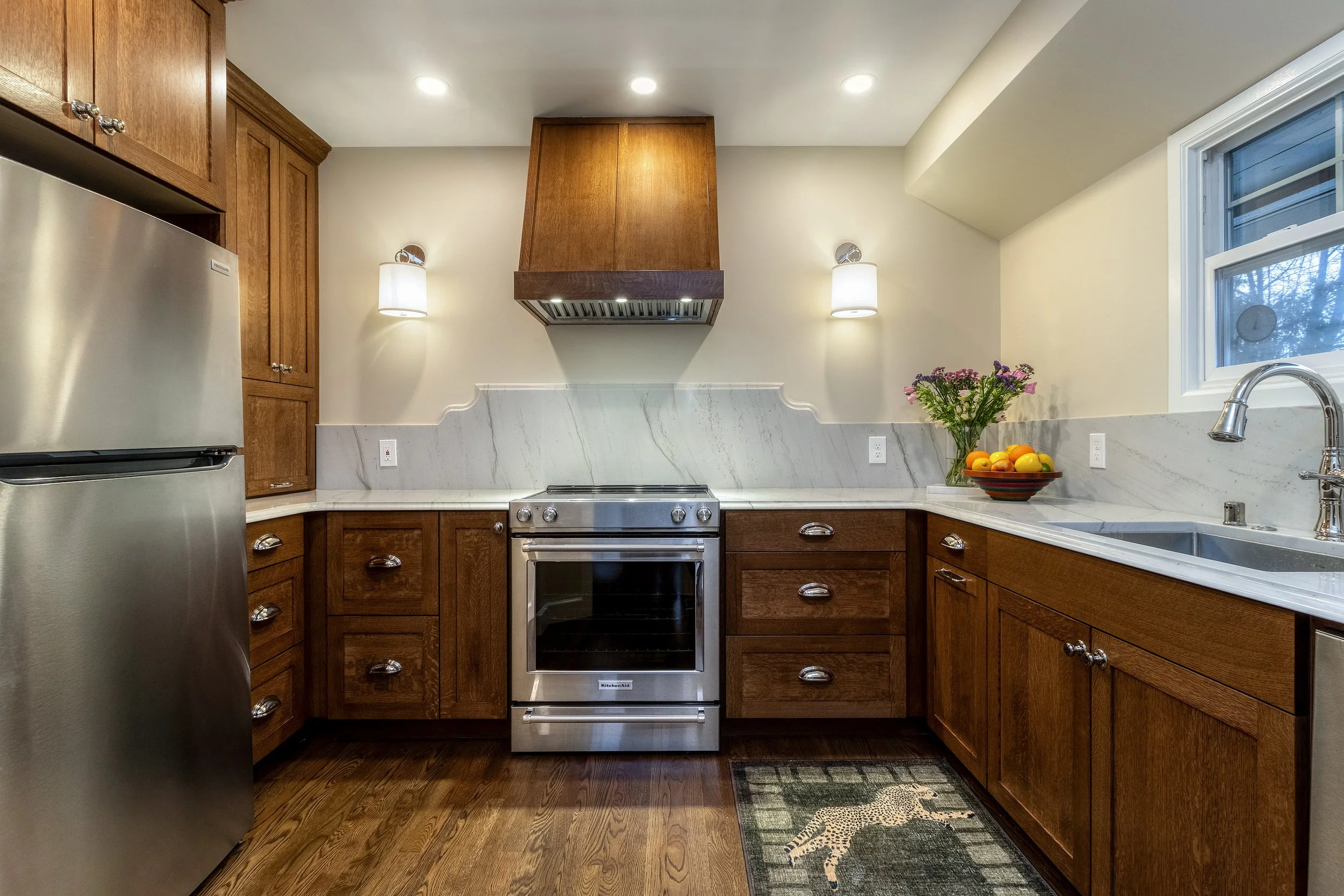
A countertop backsplash uses material such as quartz or natural stone on the wall, often matching the countertop below. It may be a short splash along the back edge of the counter or a full-height installation extending to the upper cabinets or range hood.
Those two approaches create different results. A short splash leaves much of the wall exposed, while a full-height installation makes the material a larger part of the room's design. With a full-height backsplash, veining and pattern placement become especially important. The relationship between the horizontal counter and vertical wall should be considered during fabrication planning, including where seams and changes in direction will occur.
2. What Does Tile Bring to the Design?
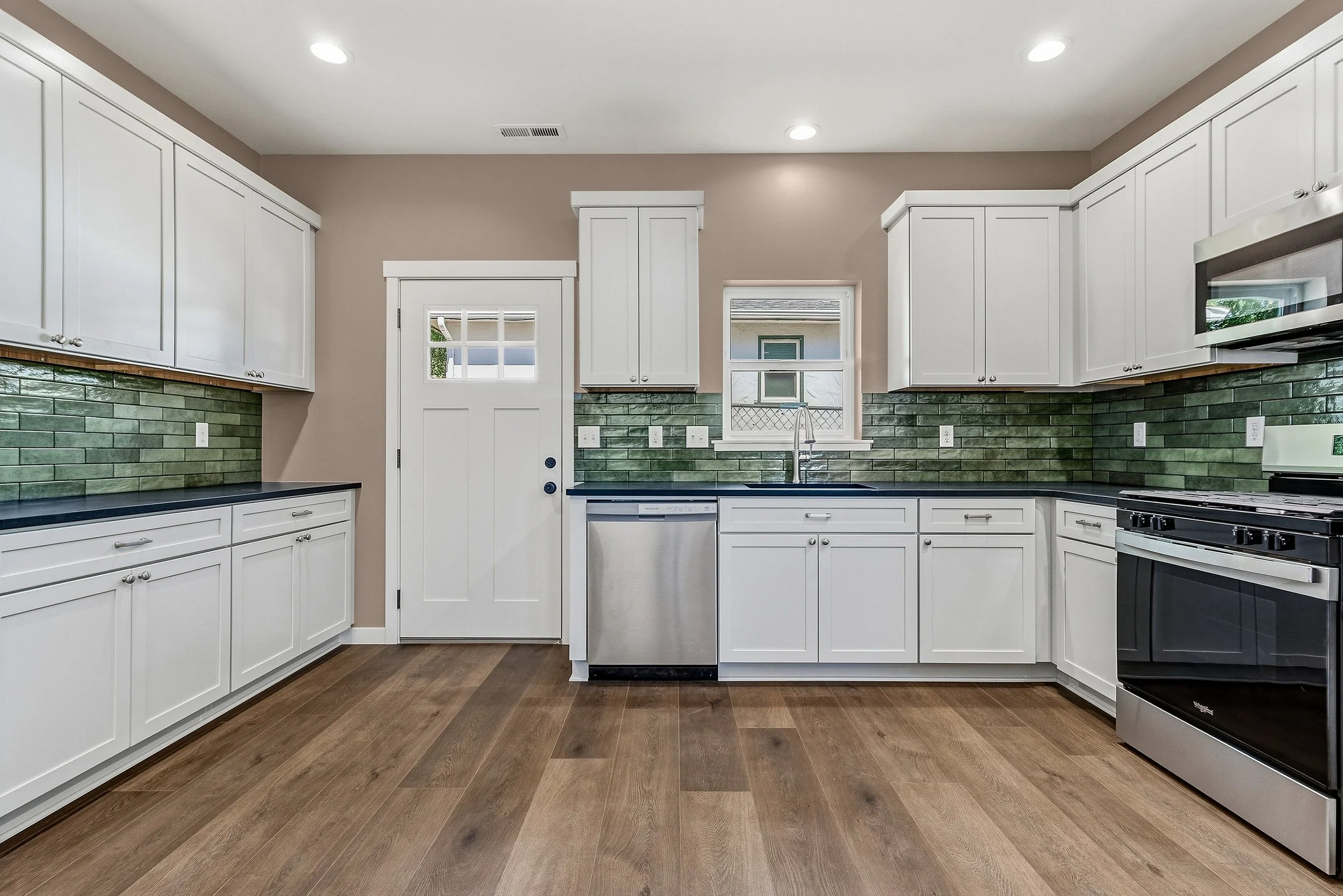
Tile introduces choices in scale, texture, color, pattern, and grout. A simple field tile can provide a quiet background, while a more expressive layout can become a focal point. The selection involves more than choosing a sample. Grout color, joint spacing, orientation, and the way the tile ends at cabinets or open walls all affect the finished appearance
Common design decisions include:
• A matching palette or contrast with the countertop
• A smooth surface or visible texture
• A simple layout or a more detailed pattern
• Subtle grout lines or clearly defined joints
Tile can complement both traditional and contemporary kitchens. Its character depends on the complete combination rather than the material name alone.
3. How Each Option Changes the Room
Continuing the countertop material up the wall can create visual continuity. It may be particularly effective when the counter has a pattern the homeowner wants to feature without introducing another competing surface. Tile offers an opportunity to bring in a different texture or proportion. It can add interest beside a simple countertop or provide a restrained background for more distinctive cabinetry. At Handley, we look at samples in relation to cabinet finishes, flooring, hardware, and lighting. A backsplash that looks right on its own can feel very different once all of those elements share the same room.
4. Cleaning Depends on the Complete Material Choice
A slab backsplash has fewer joints than a typical tile installation, which can simplify routine cleaning. It still has edges, connections, and sometimes seams that need proper detailing and care. Tile introduces grout joints, and heavily textured surfaces can require more attention than smooth ones. That does not make every tile backsplash difficult to maintain; tile and grout selection make a meaningful difference. Care requirements also vary within each category. Natural stone, engineered quartz, glazed ceramic, and other materials should be maintained according to their specific guidance. A matching countertop and backsplash does not mean every cleaning product is suitable for both
5. Installation Details Belong in the Design
The best-looking material still needs a well-planned installation. Wall conditions, exposed edges, outlet locations, and transitions can all influence how cleanly the finished work comes together.
We consider details such as:
• Where the backsplash begins, ends, and changes height
• How outlets and switches fit within the layout
• How corners, seams, and exposed edges are finished
• How the material relates to the range and hood requirements
Full-height countertop material requires coordination with measurement, fabrication, and installation. Tile requires a deliberate layout so cuts and pattern transitions look considered. With either choice, resolving those details early helps avoid decisions being improvised around finished work.
6. Compare the Installed Scope
For budgeting, countertop-material backsplashes generally cost $75-$160+ per square foot, while tile backsplashes generally cost $30-$60+ per square foot. These are planning ranges; the final price depends on the selected material and project details. Fabrication, cutouts, slab usage, edge details, tile size, layout complexity, and wall preparation can all affect cost. The comparison should include the complete installed work for the same area.
We help homeowners weigh that investment against the result they want. Sometimes the simpler choice fits the kitchen beautifully; other times, the backsplash is where an additional design investment makes the greatest difference.
Planning a Kitchen in the Walla Walla Valley?
The right backsplash should work with the room, support everyday use, and fit the overall project budget. Both countertop material and tile can accomplish that when the selection and installation are thoughtfully coordinated. Contact Handley Construction & Development to discuss your kitchen remodel or custom-home plans. We can walk through the materials, layout, and details that will bring the finished space together.
Talk With Us About Your Project
